Education
November 19, 2026 · 4 min read
Stanford Students Build up a Nuclear Ecosystem
Within a month of its launch, Stanford’s first American Nuclear Society student section signed up more than 120 members and brought more than a dozen nuclear companies and organizations to campus. Here is what we learned, and what we need from the industry next.
Stanford does not currently offer a nuclear engineering degree, and increasing numbers of students who want to work on fission or fusion typically chart their own paths, out of majors like physics, materials science, mechanical engineering, earth sciences and policy. This fall we stopped treating that as a reason to wait any longer. On October 7th, we launched Stanford’s first American Nuclear Society (ANS) student section, and a month later it had more than 120 members.
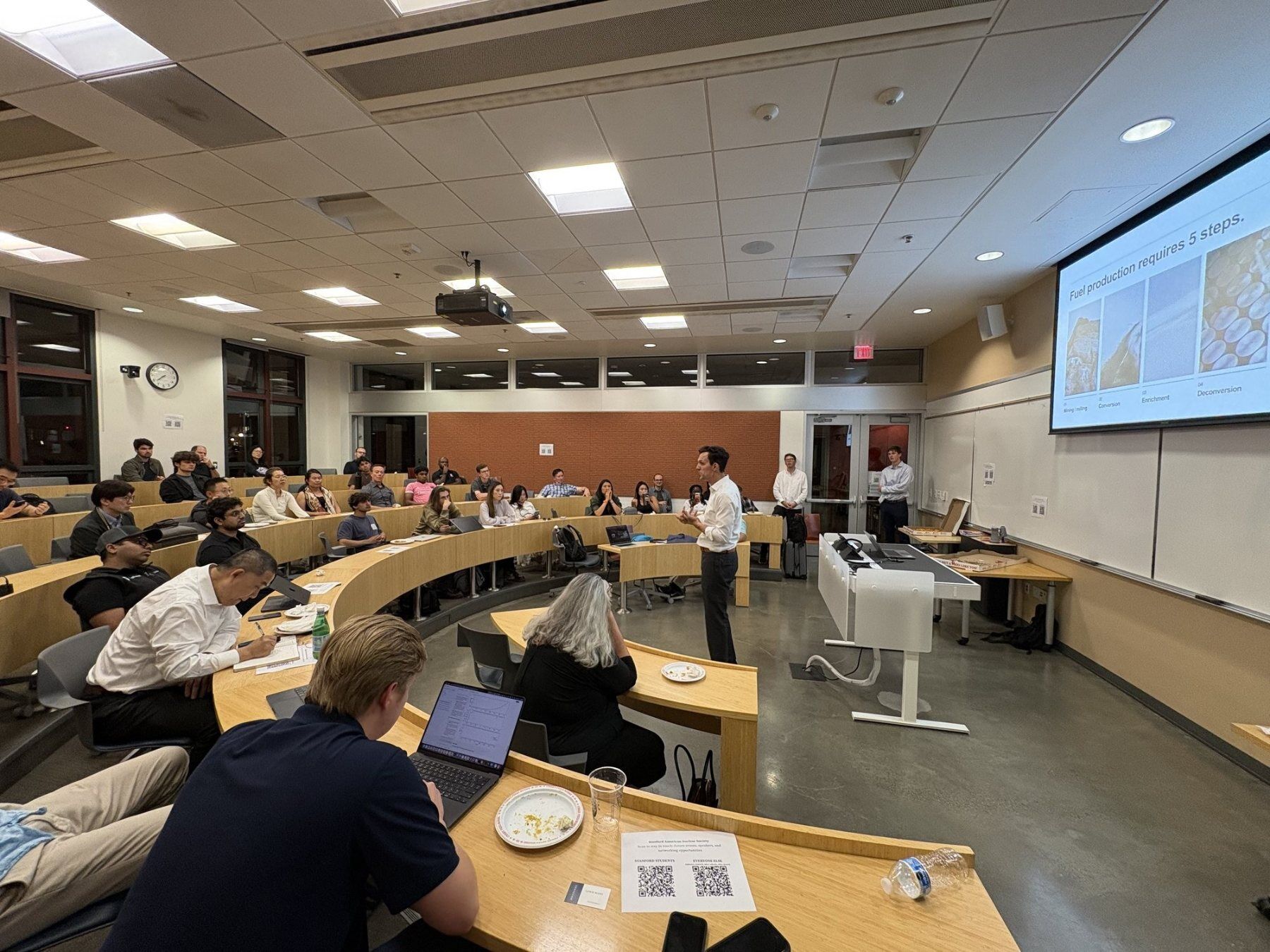
During our launch event, students heard from Lee Robinson, the COO of General Matter, Doug Bernauer, CEO of Radiant, Henry Collis from Pacific Fusion, Stefano Faubel from Fusion@Stanford, and from Carl Page, president of Anthropocene Institute, who closed out the event.
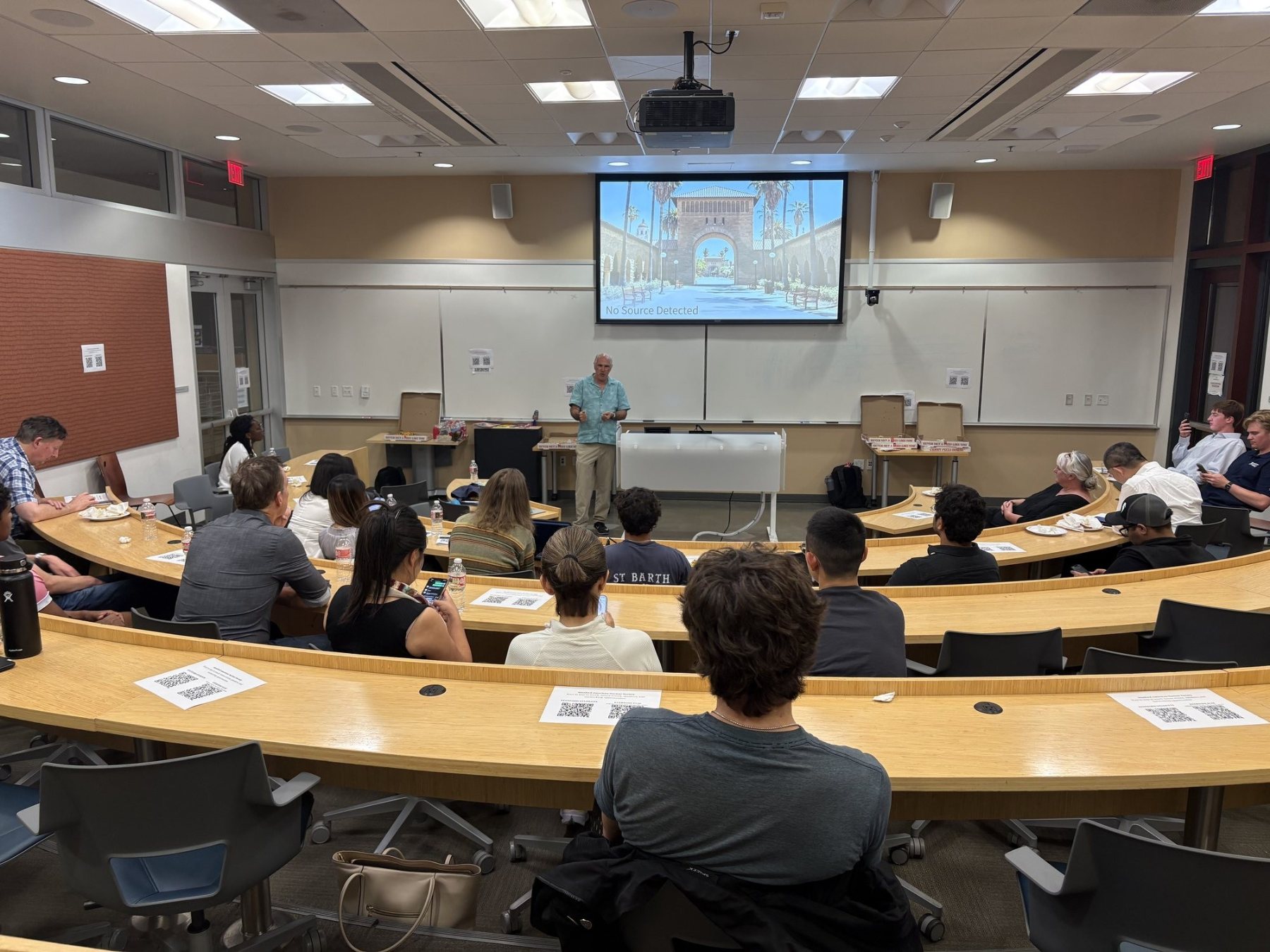
Five days later, Nuclear Fuel Cycle Day gave students exposure to the nuclear fuel supply chain. It opened up with “Rebuilding American Nuclear: Opportunities From Fuel to Power,” a Silicon Valley & the U.S. Government panel moderated by Ernestine Fu Mak, with speakers from Aalo Atomics, General Matter and Raven-Flint. Scott Nolan, founder and CEO of General Matter, followed it up with a talk on restarting American enrichment which had over 100 students attend.
Then came Nuclear Science Week, October 19-23, which we hosted in collaboration with the Stanford University Nuclear (SUN) Project. ANS President Mark Peters opened it with a video address. Over five days, 200 students came to more than a dozen talks and panels with Oklo, Kairos Power, Antares, Deployable Energy, Ontario Power Generation, PG&E’s Diablo Canyon Power Plant, the Colorado School of Mines, and nuclear engineer and investor Ray Rothrock.
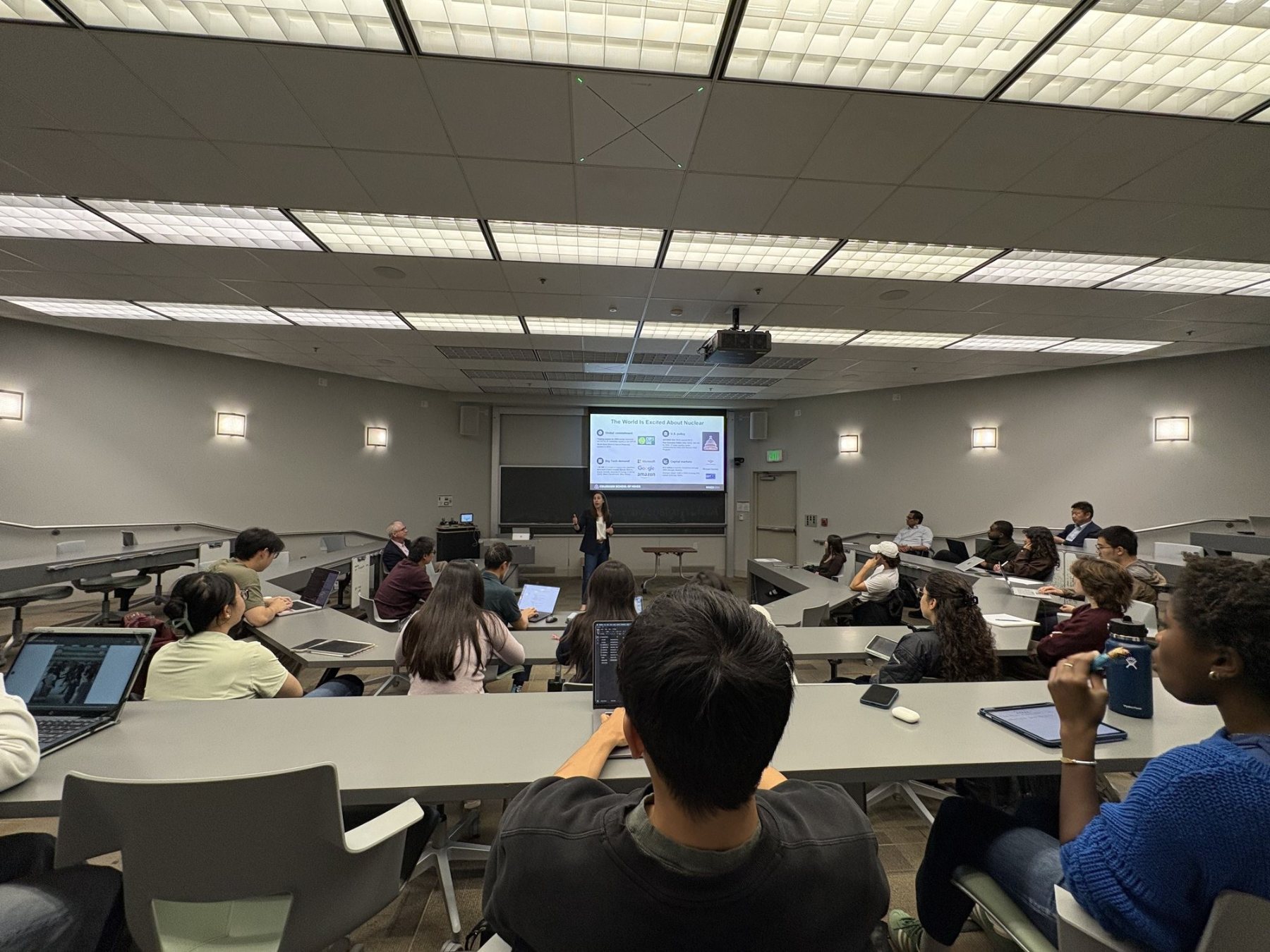
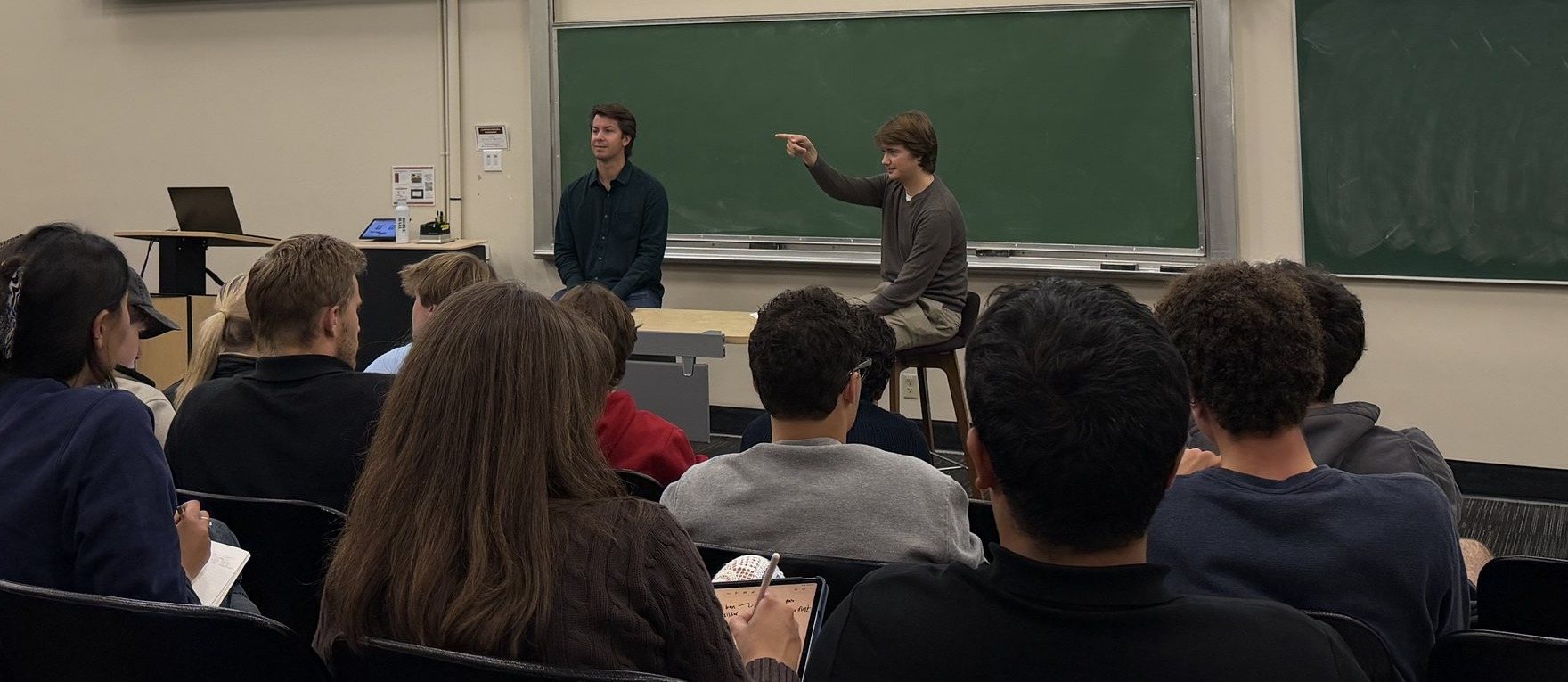
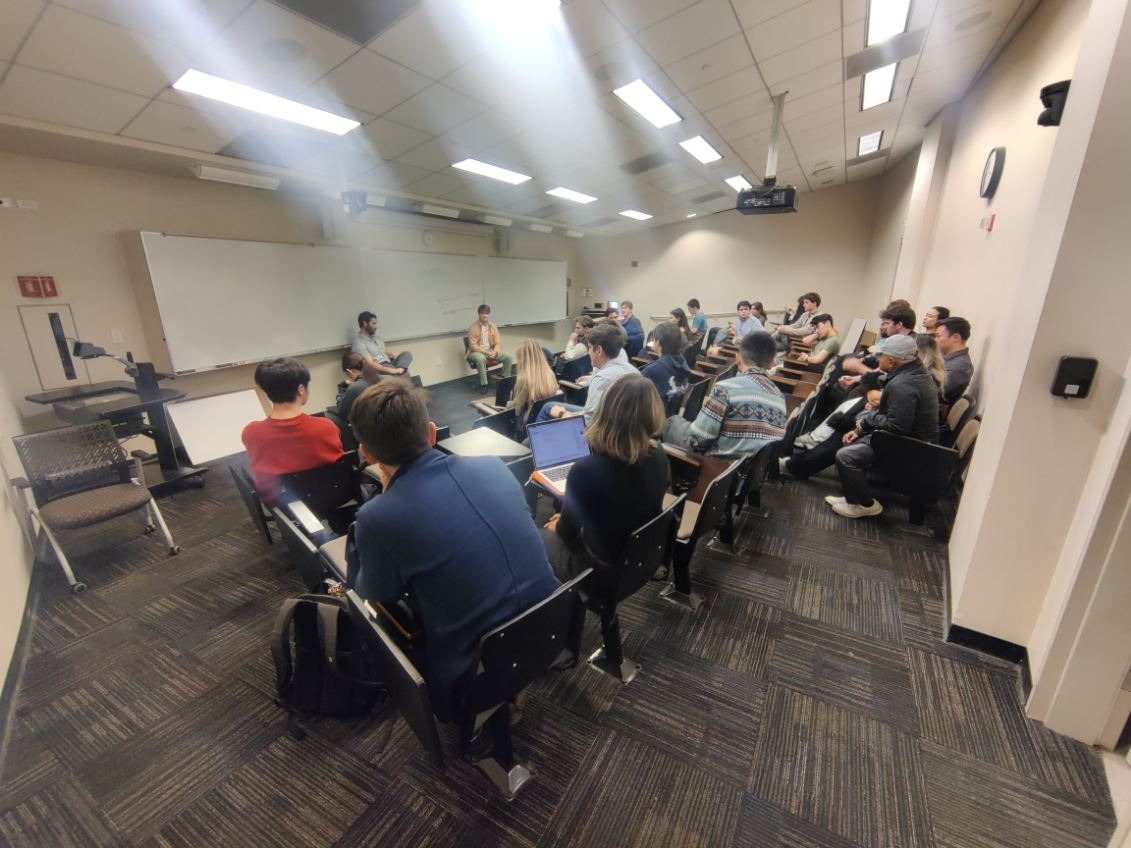
Two weeks later, on November 5, Seth Cohen, former chief counsel for nuclear policy at the Department of Energy and co-founder of Mavria, sat down with our members for a fireside chat.
What we learned from these events
There is clear and strong student interest in going into the nuclear industry, but turning this into a lasting pipeline that trains up these students to lead a fleet-scale deployment of nuclear power will be a difficult, yet worthwhile, goal that we ought to pursue.
The United States has set a goal of 400 gigawatts of nuclear power by 2050, which is roughly four times today’s fleet. Building this fleet will call on everyone from engineers, operators, lawyers, financiers and regulators in numbers the industry does not yet have.
The people who will fill those jobs are students today, many of them at schools like Stanford that haven’t had a traditional nuclear program for decades. But they need a way in, which can take the form of something like an internship, a site visit, a research problem, a mentor.
What comes next
On January 28-29, 2027, we will host the Stanford Nuclear Energy Summit, bringing Stanford faculty and students together with leaders from industry, the national laboratories and government. Until then, we plan to bring a speaker to campus every week.
If you build, run, finance or regulate nuclear, we want you to come to Stanford. Give a talk. Bring our members to your site, or into your company for a summer. Hand us a research problem. Partner with us on the Summit. Our students are ready to get to work on facilitating the nuclear renaissance. Write to us at lgarcia3@stanford.edu.
A huge thank you to Anthropocene Institute: to Carl Page for helping us launch the section, and to those at the institute who have already connected students with opportunities here, who connected us with Kairos Power for Nuclear Science Week. Thanks also to Professor Debbie Senesky, our faculty advisor, and to every speaker who gave our members an evening.