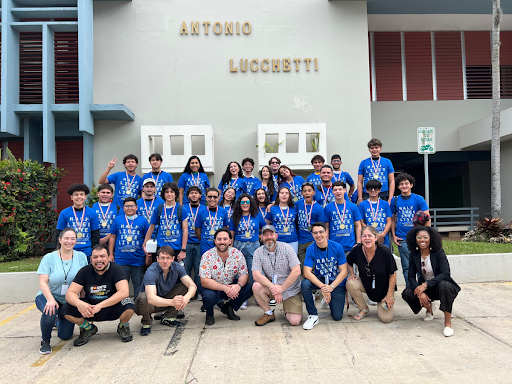
Puerto Rico – Aug 11, 2025: Our own Director of Data Science, Guido Núñez-Mujica, is helping expand nuclear energy education across the Latin world. He recently returned from Puerto Rico, where he served as an instructor at the pioneering First Bilingual English-Spanish Nuclear Engineering Bootcamp—organized by Dr. Charlyne Smith, nuclear engineer and quantum materials scientist at EPRI, in partnership with the University of Puerto Rico–Mayagüez, Generation Atomic, the American Nuclear Society, and the Anthropocene Institute. The bootcamp was a momentous achievement as the first of its kind outside Jamaica and the first bilingual nuclear education effort in the region. Geared toward Puerto Rican high school students, the program introduced the fundamentals of nuclear science, the workings of nuclear reactors, and the integral role of nuclear energy in combating climate change. Students also explored non-energy applications of nuclear technology, including medicine, agriculture, space exploration and insect control.
The curriculum
The curriculum also blended lectures, interactive games, hands-on grid simulations, and group exercises that helped students grasp the complexities of energy production—particularly the unique energy challenges faced by island communities like Puerto Rico. Furthermore, the bootcamp tackled the real-world policy dimensions of how political decisions can have major implications for the energy grid.
Visiting the BONUS reactor
An additional highlight of the program was a visit to the BONUS experimental reactor—now a museum and a powerful reminder of Puerto Rico’s nuclear past and a compelling symbol of the island’s potential for an abundant, reliable, and low-carbon energy future.
What comes next
This bootcamp is just the beginning and is part of a growing effort to make nuclear science more accessible and culturally relevant throughout Latin America and to add to the limited amount of resources about nuclear energy and technology available to Spanish speaking students. The next installment is set for January 2026 in Chile, as Dr Smith, Núñez-Mujica and their fellow instructors continue their mission to inspire the next generation of nuclear engineers and climate problem-solvers.
Follow along as this initiative continues to grow across the region.
#Nuclear #Energy #nuclearenergy #cleanenergy #Education #LatinAmerica #PuertoRico #Bootcamp #Students #Future #Climate #Policy


About the Author
The Anthropocene Institute funds and publishes research on nuclear energy, solid-state fusion, grid electrification and ocean carbon, and convenes the entrepreneurs, investors and policymakers building clean firm power.