
Education
November 19, 2026 · 6 min read
Don’t Panic! Radiation Is Everywhere
The real question is not “is there radiation?” but “how much, and what kind?”
Don’t panic
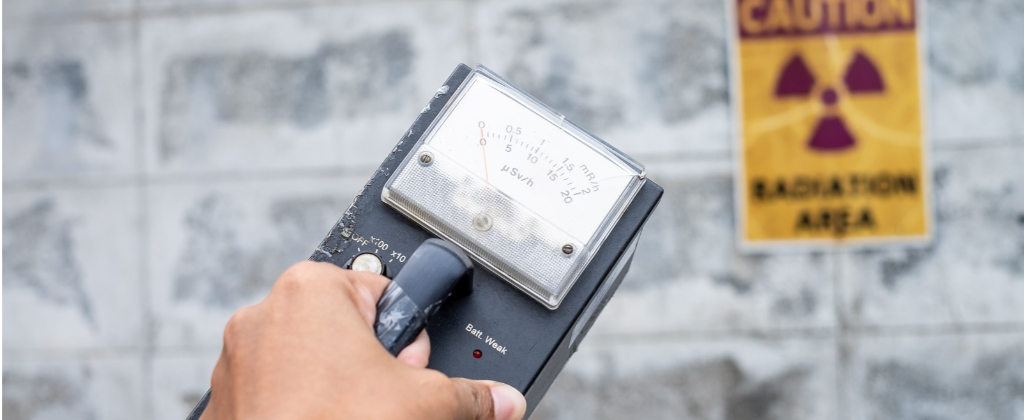
Radiation can be dangerous, and it’s smart to stay away from dangerous things when we can. But we can’t run away from everything, and radiation is everywhere. It rises from rocks and soil, rains down from space, and comes from the food we eat. Bananas are slightly radioactive because of their natural potassium, and so is your own body.
The average person gets about 2.4 millisieverts (mSv) of natural radiation every year (UNSCEAR). Life on Earth has always lived with it. The real question is not “is there radiation?” but “how much, and what kind?”
Put it in perspective
Worrying about radiation is a poor use of your time compared with the things that really put people in danger.
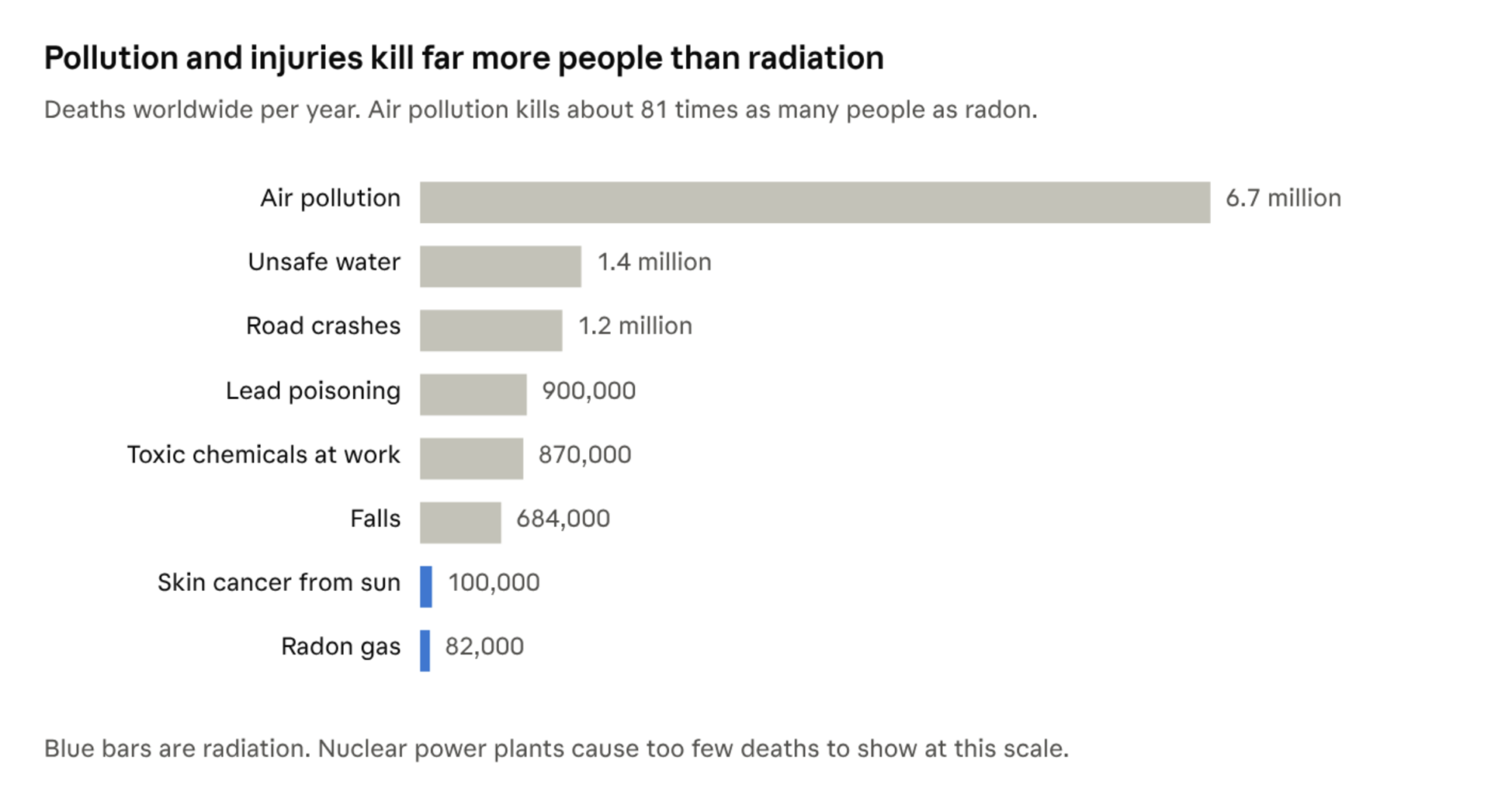
For people aged 5 to 29, three of the top five causes of death are road crashes, homicide and suicide (WHO). Buckling up, wearing a helmet, learning to swim and talking to someone when you’re struggling protect you far more than avoiding radiation ever could.
Not all radiation is the same
Different kinds of radiation behave very differently. What stops each one tells you a lot about when to worry.
| Kind | What it is | What stops it | When it matters |
|---|---|---|---|
| Alpha | Heavy, slow particles | A sheet of paper, or the dead outer layer of your skin | Only if you breathe in or swallow the material giving it off |
| Beta | Light, fast particles | A thin sheet of aluminum | Mostly up close to strong sources |
| Gamma | Very energetic light | Thick lead, concrete or water | Strong sources, which are kept behind shielding |
| Ultraviolet (UV) | Invisible light in sunshine | Clothing, shade, a hat | Every sunny day: the dose is what counts |
UV is a different kind of radiation from the other three. It can’t knock atoms apart deep inside you, but it’s the kind most likely to affect you personally.
How to recognize real danger
Dangerous amounts of radiation are rare, and they are labeled. Here is what to watch for:
- The radiation symbol. A three-bladed trefoil marks products, buildings and shipping containers holding radioactive material.
- The danger symbol. Waves, a skull and a running person mean a seriously dangerous source. If you ever find a strange metal container or device, don’t open it. Walk away and tell an adult.
- Smoke alarms. Ionization-type alarms hold a tiny radioactive source, which is why the label says to dispose of them carefully. Photoelectric alarms have none.
- Strict rules. Federal agencies (NRC, DOT and OSHA) control how radioactive materials are stored, shipped and thrown away. Engineers and scientists have done good work here, so follow the rules.
- Emergency alerts. In a real emergency you’ll hear sirens or get alerts on your phone. Listen to them.
What actually works
A few simple habits handle almost all the radiation risk you’ll ever face.
Get sunlight in the right dose. Sunlight is good for you. People who get regular sun tend to live longer, sleep better and feel better, and kids who play outside are less likely to need glasses. The danger is burning, especially for people who stay indoors and then get a big dose all at once.
- Get outside often, and let your skin get used to the sun a little more each day.
- Don’t burn. When you’ve had enough, a hat, a shirt or some shade is the best protection.
- If you use sunscreen, mineral ones (zinc oxide or titanium dioxide) are the ones regulators are most confident are safe.
- Some scientists think morning sunlight may help get your skin ready for stronger midday sun. That idea is still being tested.
Watch out for radon. Alpha particles can’t get through your skin. But radon is a radioactive gas that seeps up from the ground into basements, especially poorly ventilated ones in places like Pennsylvania. When you breathe it, its radioactive offspring stick to the lining of your lungs. That lining is living tissue with no dead layer to protect it, so alpha particles can damage it. Radon is a real cause of lung cancer.
- Radon test kits are cheap. If levels are high, a fan and pipe under the floor can vent the gas outside.
- Never smoke. Smoking makes radon far more dangerous.
Don’t fly to Mars (yet). Space radiation on a Mars trip is a serious danger until someone invents much better shielding.
Try it yourself
You don’t have to take anyone’s word for what blocks UV, including ours. UV-sensitive beads change color in sunlight, so you can test it.
- Get a handful of UV-color-changing beads (sold cheaply for classrooms).
- Set out four small groups: bare, under a T-shirt, under a smear of zinc oxide cream, and under plain lotion.
- Put them in direct sun for one minute, then compare the colors.
- Try again in early morning and at midday. Which time of day changes the beads most?
- Write down what you predicted before each test, and whether you were right.
That last step is the habit that matters most: test claims, whoever makes them.
Fresh air and sunshine
For pollution that rises from underground, the answer is dilution: fresh air. Ventilating your home protects you from radon. It also protects you from things that matter even more, like germs and chemical air pollution. On smoky or polluted days, use an air filter instead of open windows.
The cures for most everyday dangers are ordinary things done in sensible amounts. Get outside, breathe fresh air, don’t burn, don’t smoke, buckle up, and save your worry for the things that really count.
Sources
- Lancet Commission on Pollution and Health, 2019 update
- WHO: Injuries and violence fact sheet
- GBD 2021: Lung cancer from residential radon
- GLOBOCAN 2022: Skin cancer deaths
- IARC: UV and melanoma, 2025
- Lindqvist et al.: Sun avoidance and mortality
- FDA: Sunscreen absorption study
- UNSCEAR: Natural background radiation
About the Author
The Anthropocene Institute funds and publishes research on nuclear energy, solid-state fusion, grid electrification and ocean carbon, and convenes the entrepreneurs, investors and policymakers building clean firm power.