
Interview
November 18, 2025 · 4 min read
Pro-Math, Pro-Science: Gayatri Karnik at COP30 on What Germany’s Nuclear Exit Teaches
Anthropocene Institute policy analyst Gayatri Karnik spoke with We Don’t Have Time at COP30 about the emissions cost of Germany’s nuclear phase-out and why energy decisions should follow the data.
By Gayatri Karnik and We Don’t Have Time
Video: We Don’t Have Time
What the data showed in Germany
At COP30 in Belém, Brazil, We Don’t Have Time spoke with Gayatri Karnik, policy analyst at the Anthropocene Institute, about Germany’s Atomausstieg, its exit from nuclear power, and what it means for countries planning their own energy transitions.
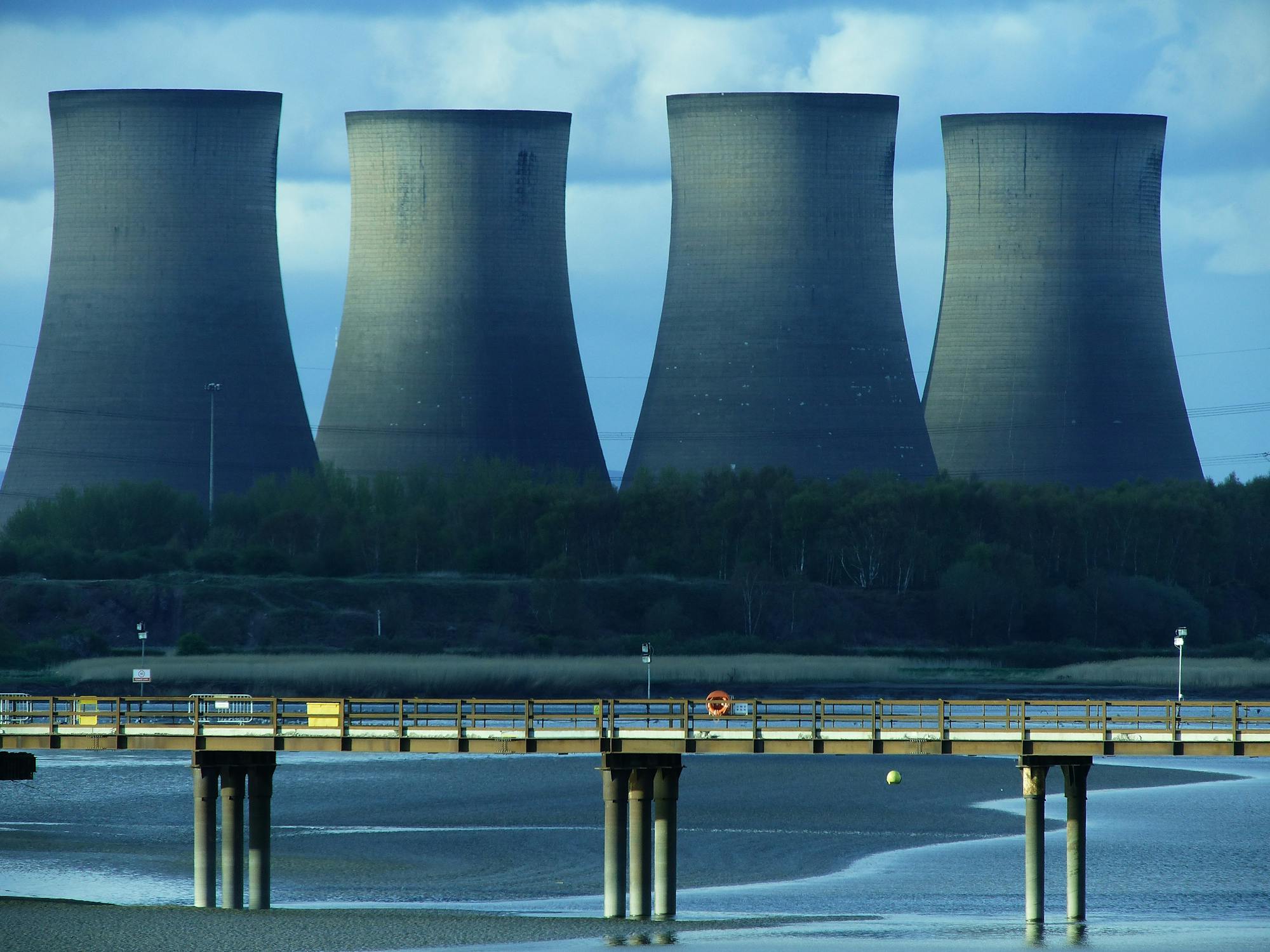
Karnik began with the expectation that shaped the policy. The phase-out was announced in 2011, directly after Fukushima, on the assumption that renewables would fill the gap left by nuclear. When the Anthropocene Institute analyzed the data for The German Nuclear Phase-out Report 2025, it found an additional 730 million tonnes of emissions coming out of Germany over the period, which she compared to roughly a year of the country’s total emissions.
Before the exit, nuclear supplied about 25% of German electricity. It has since been almost entirely removed from the grid and replaced, Karnik said, mostly by coal and some by gas: 98% coal and 2% gas.
“It has cost more death and more devastation than had nuclear energy been used as intended.”
Looking at the whole system
Karnik argued that nuclear has to be judged by its role in the grid as a whole, not as a single source. Nuclear is firm baseload power, which renewables cannot provide however scalable and efficient they become. Geothermal and hydro can serve that role in some places, she said, but not at the scale of demand nuclear can meet.
Nuclear is also a thermal source. It can supply heat for district heating and for industrial processes that have so far been hard to decarbonize without fossil fuels. She acknowledged that costs are high and that many people are working to make nuclear more reliable and more affordable.
Germany, in her view, is the test case. If any country could decarbonize without nuclear, none was better positioned than Germany. Because its emissions rose after the phase-out, she said, it is very unlikely that other modern industrial countries can decarbonize their grids without firm power like nuclear.
Fear, data and energy security
Karnik described the shutdown as the result of a narrative of fear and anxiety about nuclear energy, one that was not rooted in science or data. She asked politicians to look at the evidence instead, however strong the narratives against an energy source may be: its direct carbon emissions, the plants already operating in their country, and the energy security those plants provide.
She pointed to Europe after the war in Ukraine. Countries that could produce nuclear energy domestically fared far better than those relying on imported fossil fuels and Russian gas. France, Germany’s neighbor, fared much better in the aftermath. She urged leaders to plan for the long term rather than settle for what is convenient or politically acceptable.
Technology neutrality at COP30
COP30, Karnik said, is the right place for politicians to champion technology neutrality: setting the future of their energy grids by the science and the data.
“It’s not being pro-nuclear, it’s not being pro-renewables. It is about being pro-math, it’s about being pro-science.”
The UNFCCC is itself a technology-neutral forum, she noted, but implementation does not always hold to that ethos. Her hope for the negotiators and decision makers at COP30 was that they keep that promise and evaluate each source by its capacity to decarbonize, and reach a conclusion everyone can be proud of.
The full findings are in The German Nuclear Phase-out Report 2025 and the 2026 update.
This piece draws on an interview with Gayatri Karnik, policy analyst at the Anthropocene Institute, recorded by We Don’t Have Time at COP30 in Belém, Brazil. Watch the full conversation: youtube.com/watch?v=yqFRCudrdRM
About the Authors
Gayatri Karnik is an international climate and nuclear energy policy specialist, an IAEA Maria Skłodowska-Curie Fellow, and Vice-President of Women in Nuclear Global Young Generation. We Don’t Have Time is a climate media platform that recorded this interview at COP30.
Policy Analyst, Anthropocene Institute

Climate media platform